

How do you get a burnished concrete finish?
Burnished concrete is a polished concrete finish where no aggregate is exposed, achieved by polishing the cement cream layer at the surface of the slab. Because the process does not involve grinding or removing material, the final appearance is determined at the time of concrete placement and finishing. The slab must be placed and finished as flat and level as possible, as any surface highs, lows, or undulation will remain visible in the finished floor. If the floor is not laid flat, light will reflect unevenly across the surface, creating a rippled or wave-like appearance, think of the surface of the ocean.
When using a power trowel (helicopter), the concreter must burnish the surface until it darkens or “goes black.” This is an industry term referring to the densification and closing of the cement cream at the surface, and it marks the beginning of the polishing process. An experienced concreter will understand this requirement for a burnished finish.
We typically return around two weeks after placement to continue polishing, allowing the concrete sufficient time to cure. While higher-strength concrete mixes can reduce curing time, we recommend a minimum of 32 MPa to achieve a consistent and durable burnished finish.
Why early protection of the slab is critical
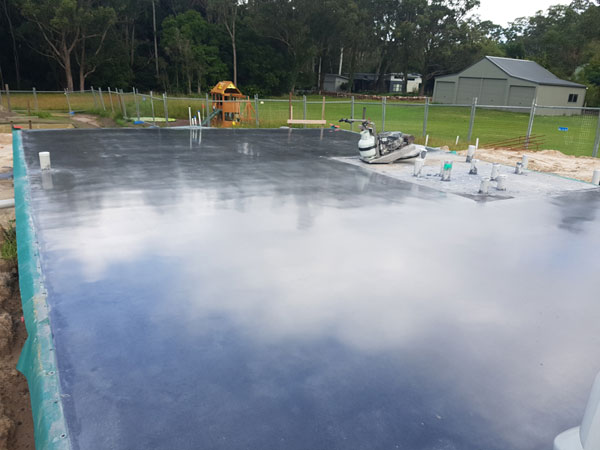 It is essential that the concrete is protected before polishing. If the slab is exposed to construction traffic, moisture, rust, or timber tannins, staining and marking can occur that cannot be removed without grinding the surface. Heavier grinding would expose aggregate and change the finish, making a true burnished result unachievable.
By having Diagrind complete the polishing early, a higher-quality finish can be achieved. Polishing before walls are installed also improves access and significantly reduces the risk of contamination. Because no material is removed from the surface during burnishing, any stains present at this stage will remain visible.
Once polished, the floor is sealed and becomes reasonably resistant to minor damage. However, ongoing protection during the remainder of the build is still essential.
How to protect burnished concrete during construction
The most effective protection starts with a clean job site. Prior to walls and roofing being installed, regularly sweep or blow debris and contaminants off the slab. Avoid leaving nails or screws on the surface where they can become wet and rust, and do not store timber directly on the concrete, as moisture can cause tannin staining.
Once walls and the roof are in place, the floor should be covered. We most commonly use RAM Board or similar floor protection systems, although the final method is typically determined by the builder.
Can damage be repaired?
If the floor is damaged during construction, many issues can be repaired depending on the type and severity of the damage. Early assessment is important to prevent permanent defects.
If you have any questions about achieving or protecting a burnished concrete finish, contact the team at Diagrind® today.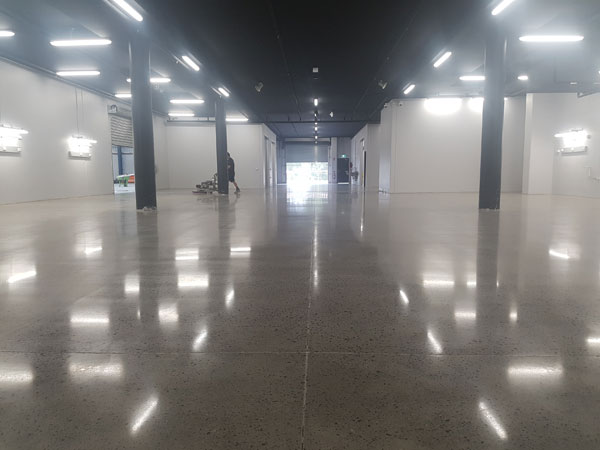
Burnished Concrete – Frequently Asked Questions
Can you fix ripples in burnished concrete?
No. Ripples, waves, or surface undulation in burnished concrete cannot be corrected once the slab has cured. Because a burnished finish does not involve grinding the surface, any highs and lows present at placement will remain visible in the finished floor. Correct slab flatness must be achieved during the concrete pour and finishing stage. If we grind the concrete flat to remove the ripples this will expose aggregate and fines making it no longer a burnished finish.
Can stains be removed from burnished concrete?
Yes and No. This is a very loaded question. In many cases, no. Stains caused by rust, tannins, oils, or construction contaminants usually cannot be removed from burnished concrete without grinding the surface, which would expose aggregate and change the finish. This is why early protection of the slab is critical. But marks left by dirt or wheels like forklifts can be removed without causing over exposure of fines and aggregate can occur.
Is burnished concrete cheaper than exposed aggregate finishes?
Burnished concrete can be more cost-effective than exposed aggregate finishes because it requires minimal grinding. However, it demands a higher standard of concrete placement, finishing, and site protection. Poor slab quality or contamination can increase costs or make the finish unachievable.So you may pay less for the finishing of the surface but may need to pay more for a higher quality placement of the concrete.
When should polishing be done on a burnished slab?
Polishing should be carried out once the concrete has cured—typically around two weeks after placement, depending on concrete strength and conditions. Early coordination ensures the slab is polished before it becomes contaminated or damaged by other construction trades. Some projects have a topping slab installed during the build and this can be polsihed later in the bulding process.