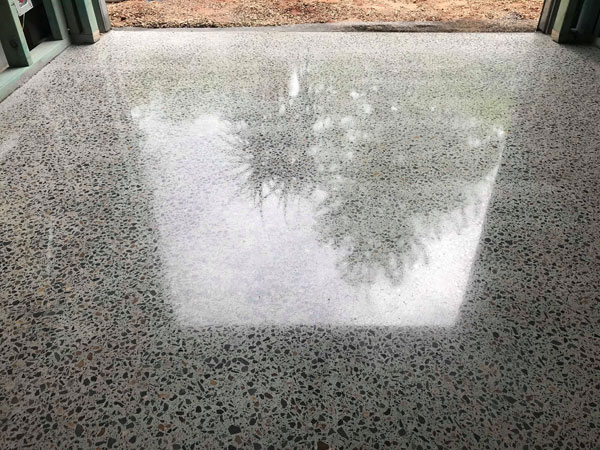
 Polished concrete is often assumed to be slippery because of its smooth, glossy appearance. In reality, properly polished concrete is not inherently slippery and can perform as well as - or better than - most common flooring surfaces like tiles and timber.
Whether polished concrete is slippery depends on surface finish, moisture conditions, and maintenance, not just how shiny the floor looks.
Why Polished Concrete Isn’t as Slippery as It Looks
Polished concrete achieves its finish through mechanical grinding and polishing, not by applying a topical coating. This process creates a dense, refined surface that provides consistent traction underfoot.
Unlike sealed tiles or coated floors, polished concrete:
- Does not rely on waxes or surface films
- Maintains micro-texture that contributes to grip
- Performs consistently when dry
A high-gloss finish reflects light, which can make the surface look slippery, even when it is not.
What Happens When Polished Concrete Gets Wet?
Like all hard flooring surfaces, polished concrete can become more slippery when wet. However, polished concrete generally performs better than many alternatives, such as tiles with surface sealers.
Slip resistance when wet is influenced by:
- The level of polish (low, medium, or high gloss)
- The presence of contaminants (water, oils, dust)
- Cleaning products used on the floor
In areas exposed to moisture, slip resistance can be improved through:
- Lower gloss finishes
- Anti-slip treatments
- Correct cleaning and maintenance practices
 Polished Concrete vs Other Flooring Types
Compared to common flooring options, polished concrete performs well:
- Polished concrete: Consistent traction, no coatings to fail
- Tiles: Can become very slippery when sealed or wet
- Epoxy coatings: Slip resistance depends on additives and wear
- Vinyl: Often more slippery when wet or contaminated
Because polished concrete does not rely on topical coatings, its slip performance remains more stable over time.
Slip Resistance and Australian Standards
Slip resistance in Australia is assessed using recognised testing methods, including pendulum testing, which provides a P rating (P0–P5). This rating measures how slip-resistant a surface is, particularly in wet conditions.In addition, some environments—such as industrial, commercial kitchens, and high-risk work areas—may require an R rating (R9–R13). R ratings assess slip resistance under oil-contaminated conditions and are typically applied in workplaces rather than residential settings.Polished concrete floors can be tested, specified, and adjusted to achieve the appropriate P or R rating for their intended use. This may involve selecting the correct level of polish, applying slip-resistant treatments, or modifying maintenance practices.For commercial and public environments, slip resistance should always be assessed based on how the space is used, including foot traffic, moisture exposure, and cleaning regimes—not simply how glossy the floor appears.
How to Reduce Slip Risk on Polished Concrete
To minimise slip risk:
- Choose the appropriate gloss level for the space
- Use entrance mats to reduce moisture and debris
- Clean with neutral cleaners designed for polished concrete
- Avoid waxes or surface coatings
- Address spills promptly
In high-risk areas, additional slip-resistant treatments can be applied without compromising the appearance of the floor.
Is Polished Concrete Safe?
Yes—when correctly specified, installed, and maintained, polished concrete is a safe and practical flooring option for homes, commercial buildings, and industrial spaces.
For advice on selecting the right finish and slip resistance level, speak with the team at Diagrind.
Frequently Asked Questions (FAQ)
Is polished concrete slippery when wet?
Polished concrete can become more slippery when wet, similar to tiles or vinyl. However, its performance depends on the level of polish, surface condition, and cleanliness. Slip resistance can be improved with lower-gloss finishes or anti-slip treatments in wet areas.
Is polished concrete more slippery than tiles?
Not necessarily. Many tiles become very slippery when sealed or wet. Polished concrete often provides more consistent traction because it does not rely on topical coatings or waxes.
Can polished concrete be made slip resistant?
Yes. Slip resistance can be adjusted through the level of polish, surface treatments, and correct cleaning methods. Floors can also be tested to confirm slip ratings where required.
Does high-gloss polished concrete mean slippery?
No. Gloss level affects appearance, not traction. A high-gloss polished concrete floor may look slippery due to light reflection, but that does not automatically mean it performs poorly underfoot.